Enhancing Product Quality with Swiss Screw Machining Techniques
Understanding Swiss Screw Machining Techniques
What is Swiss Screw Machining?
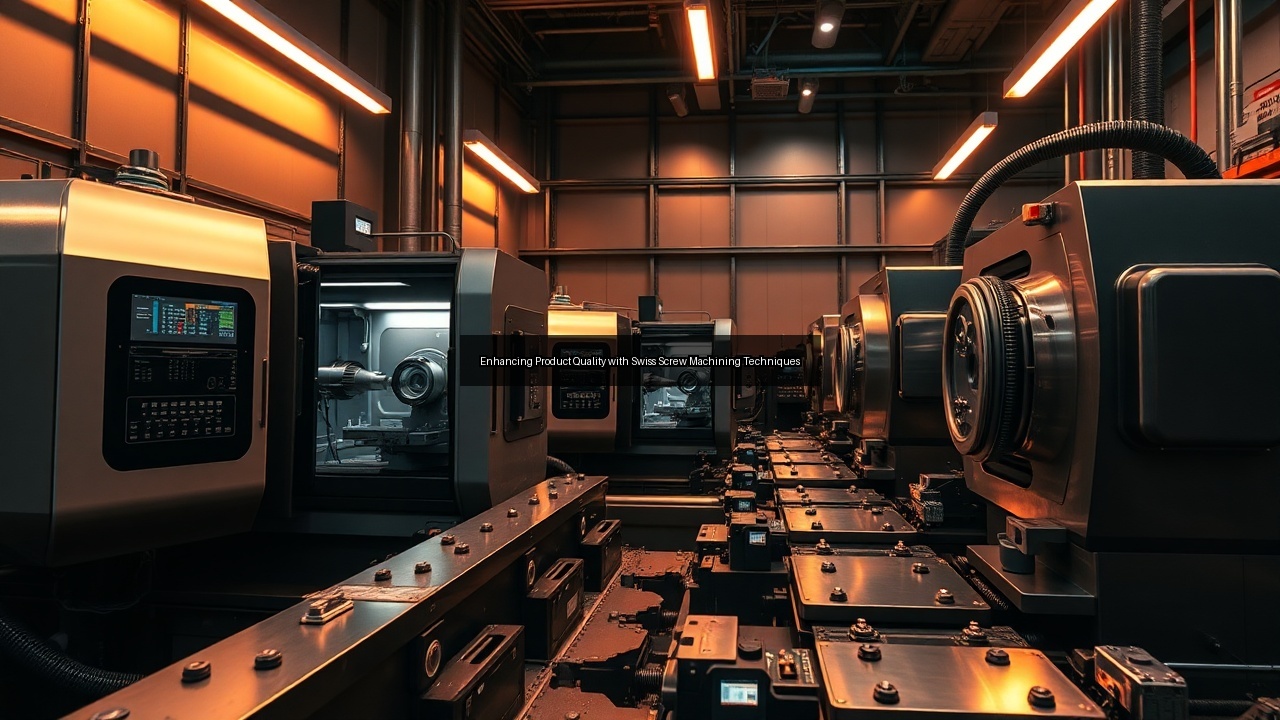
Swiss screw machining represents a specialized manufacturing process that delivers high precision and efficiency, primarily for small, complex parts. Originating in Switzerland, this technique utilizes a unique form of automatic lathe known as a Swiss lathe. Unlike traditional lathes, Swiss lathes allow the workpiece to slide along a guide, enabling the tooling to approach from several angles. This configuration is particularly effective for producing parts that require intricate designs and tight tolerances. The process is particularly suitable for high-volume production, where consistency and accuracy are vital.
Benefits of Swiss Screw Machining for Precision Engineering
Swiss screw machining offers numerous advantages for precision engineering. The primary benefit lies in its ability to achieve extremely tight tolerances, often within a few microns. This level of precision is crucial in industries such as aerospace, where even the smallest deviation can lead to significant performance issues. Additionally, Swiss screw machines can handle a variety of materials, including metals and plastics, making them versatile for different applications. The automation involved in the process also enhances efficiency, reducing production time and minimizing waste. Furthermore, Swiss lathes excel at manufacturing complex geometries, allowing engineers to innovate without compromising on quality.
Key Tools Used in Swiss Screw Machining
Swiss screw machining relies on a range of specialized tools to achieve its high level of precision. Key among these are precision tool holders, which securely grip the cutting tools and allow for accurate machining of intricate features. Additionally, threading tools are essential for creating screw machined parts with threaded components, a common requirement in many applications. Other tools include live tooling devices, which enable milling operations on a lathe, expanding the capabilities of Swiss screw machines significantly. The combination of these tools ensures that manufacturers can produce high-quality parts that meet specific engineering requirements.
Applications of CNC Swiss Lathe Machining Services
Aerospace Industry: Meeting Rigorous Standards
The aerospace industry demands the highest level of precision and quality, making CNC Swiss lathe machining services invaluable. Components such as turbine blades, landing gear, and fuel nozzles require exceptional accuracy and durability. Swiss screw machining excels in producing these parts due to its ability to maintain tight tolerances and ensure consistent quality across large production runs. Manufacturers utilize advanced quality management systems to monitor each stage of the machining process, ensuring compliance with industry standards and safety regulations. The high-speed capabilities of CNC Swiss lathes significantly reduce lead times, enabling manufacturers to meet the rigorous timelines often required in aerospace projects.
Manufacturing Complex Geometries with Precision
Swiss screw machining stands out in its ability to manufacture parts with complex geometries. Industries such as medical device manufacturing and automotive rely on this capability to create intricate components like surgical instruments and engine parts. The versatility of CNC Swiss lathes allows for multiple operations—turning, milling, and drilling—on a single machine, which simplifies the production process and reduces the need for multiple setups. This not only streamlines operations but also enhances the overall quality of the machined parts. The capacity to produce unique designs while adhering to strict tolerances makes Swiss screw machining a preferred choice for engineers looking to innovate.
High-Volume Production: Balancing Efficiency and Quality
CNC Swiss lathe machining services are ideal for high-volume production environments, where the balance between efficiency and quality is critical. The automation inherent in Swiss screw machining allows for continuous operation, minimizing downtime and maximizing output. This efficiency is crucial in industries that require large quantities of identical parts, such as electronics and consumer goods. The precision offered by Swiss lathes ensures that each part meets the exact specifications, reducing the likelihood of defects and rework. Implementing Just-In-Time (JIT) manufacturing principles further enhances productivity, allowing manufacturers to respond swiftly to market demands while maintaining high quality.
Quality Management in Swiss Screw Machining
Implementing a Quality Management System
A robust quality management system (QMS) is essential for successful Swiss screw machining operations. A QMS establishes standardized processes and procedures that ensure consistency and reliability in production. It involves regular inspections and testing at various stages of the machining process to identify and rectify any potential issues. Compliance with international standards, such as ISO 9001, demonstrates a commitment to quality and enhances the credibility of manufacturing operations. By integrating a QMS, manufacturers can assure clients of the quality of their screw machined parts, fostering long-term relationships and repeat business.
Achieving Tight Tolerances in Machined Parts
Achieving tight tolerances is a hallmark of Swiss screw machining, essential for industries that require precision-engineered components. The unique design of Swiss lathes allows for superior accuracy, with many machines capable of maintaining tolerances within ±0.001 inches or even tighter. This capability is critical when producing parts where precise fit and function are non-negotiable, such as in medical devices or aerospace applications. Manufacturers employ advanced measurement techniques, including coordinate measuring machines (CMMs) and laser scanning, to verify that each part meets specified tolerances. This rigorous approach to quality ensures reliability in performance and safety in applications.
Continuous Improvement in Swiss Lathe Processes
Continuous improvement is a fundamental principle in Swiss screw machining, where manufacturers strive to enhance processes and outcomes. Techniques such as Six Sigma and Lean Manufacturing help identify inefficiencies and minimize waste in production. Regular training for operators ensures they stay updated on the latest technologies and methodologies, enhancing overall efficiency. By fostering a culture of continuous improvement, manufacturers can adapt to changing market demands and technological advancements, ensuring they remain competitive. This commitment to ongoing enhancement not only improves product quality but also boosts customer satisfaction and loyalty.
Future Trends in CNC Swiss Lathe Machining
The Role of Technology in Enhancing Efficiency
Technology plays a pivotal role in shaping the future cnc lathe machining of CNC Swiss lathe machining. Innovations in automation, such as the integration of robotics, streamline operations and enhance productivity. Advanced software solutions facilitate better planning and scheduling, which minimizes downtime and optimizes resource allocation. Furthermore, machine learning algorithms analyze production data to identify trends and predict maintenance needs, reducing the likelihood of unexpected breakdowns. As these technologies continue to evolve, they contribute to even greater efficiencies in Swiss screw machining, enabling manufacturers to meet increasing demands for precision and quality.
Adapting to Industry 4.0 in Screw Machining
Industry 4.0 represents a significant shift in manufacturing, emphasizing connectivity and data exchange between machines and systems. Swiss screw machining will increasingly incorporate IoT (Internet of Things) technologies, allowing for real-time monitoring and data analysis. This connectivity enables manufacturers to gain insights into production processes, leading to improved decision-making and enhanced operational efficiency. By embracing Industry 4.0 principles, Swiss screw machining can achieve unprecedented levels of automation and integration, positioning manufacturers at the forefront of technological advancements in machining.
Sustainable Practices in Swiss Machining
Sustainability is becoming a critical focus in CNC Swiss lathe machining. Manufacturers are increasingly looking for ways to reduce their environmental impact while maintaining high-quality standards. Implementing energy-efficient processes, utilizing biodegradable lubricants, and recycling materials are essential steps toward sustainability. Additionally, advancements in technology enable manufacturers to optimize machining parameters, reducing waste and energy consumption. By prioritizing sustainable practices, Swiss screw machining can not only meet regulatory requirements but also appeal to environmentally conscious consumers and businesses.
See Also
- CNC Swiss Machining Services for the Demanding Aerospace Industry
- How CNC Swiss Lathes are Revolutionizing Aerospace Component Production
- Innovative Techniques in Screw Machining for High-Volume Production
- Exploring the Benefits of Swiss Screw Machining for Complex Geometries
- Transforming Complex Designs into Reality with CNC Swiss Machining